
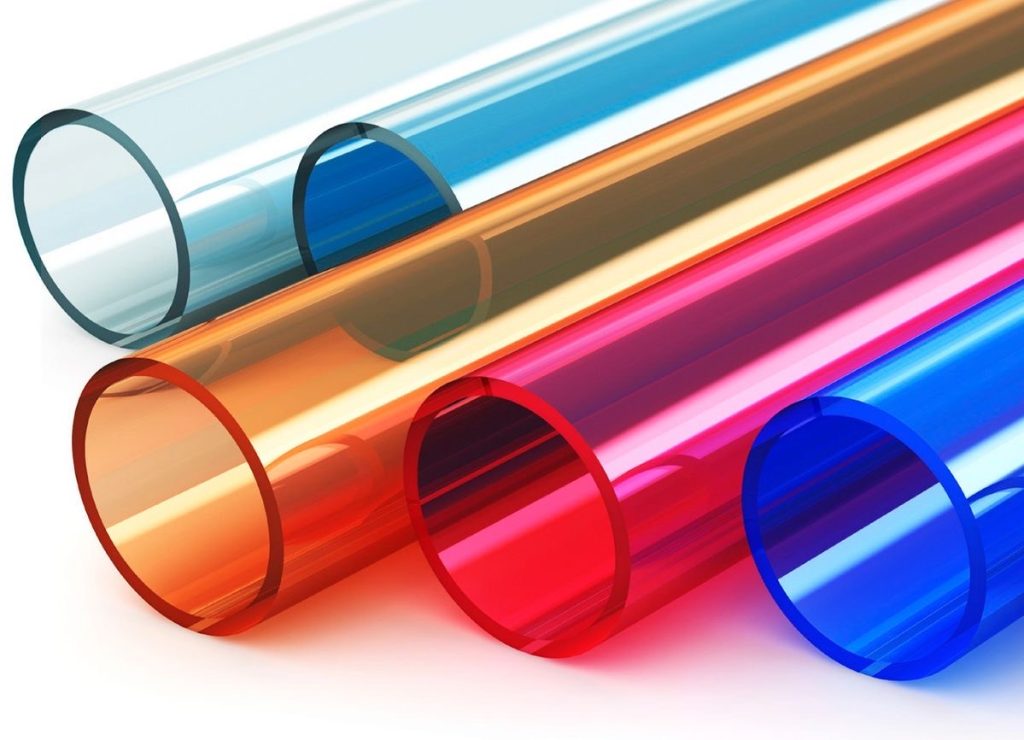
Factors Affecting the Production of Glossy Parts; From Raw Material Selection to Production Process Control
Introduction
Factors Affecting the Production of Glossy Parts is one of the key issues in the plastics, polymer, and parts manufacturing industries. Today, the glossiness of the surface of parts is not only an appearance feature, but also an indication of the quality of raw materials, the precision of the production process, and the correct engineering of the formulation. Glossy parts play an important role in attracting customers and increasing the value of the product in industries such as home appliances, automotive, electronic equipment, packaging, and decorative products.
Achieving a glossy and uniform surface is not the result of a single factor; rather, it requires a set of correct decisions in the selection of materials, additives, process conditions, and even final finishing methods. In this article, we will comprehensively examine the most important factors affecting the production of glossy parts.
1. Key Questions Before Producing Glossy Parts
Before starting design and production, the answer to a few basic questions determines the path of material and process selection:
• What is the material of the part? (Plastic or rubber)
• What is the geometric shape of the part? (Simple, complex, with sharp corners or variable thickness)
• What is the expected gloss level? (Mirror gloss, semi-gloss or satin)
• How is the production run and cost defined? (Injection, extrusion, mass production)
• Does the part need to have adequate resistance to scratches, abrasion and environmental factors?
Accurate answers to these questions are the basis for decision-making in all subsequent stages of production.

2. Gloss Measurement in Colored Parts
One of the most important factors in the production of glossy parts is how to evaluate and control gloss. Gloss is a visual parameter but can be measured with precise instruments.
Role of Pigments
• The size of pigment particles has a direct effect on gloss; the finer and more uniform the particles are, the better the light reflection is and the glossier the surface appears.
• Improper particle distribution can cause surface haze and reduce transparency.
Gloss Measurement Angle
• Gloss is usually measured at angles of 20, 60 and 85 degrees.
• Glossy surfaces are examined at an angle of 20 degrees and matte surfaces at an angle of 85 degrees.
• The choice of angle depends on the type of application and how the part is viewed.
Using devices such as a gloss meter and spectrophotometer, it is possible to accurately control gloss and reflective haze.
3. The Role of Raw Material Selection in Part Gloss
The correct selection of raw materials is one of the most fundamental factors affecting the production of glossy parts.
Thermoplastics vs. Rubbers
• In general, thermoplastics create a glossier surface than rubber materials.
• Polymers such as ABS, PMMA, and PC have high gloss potential.
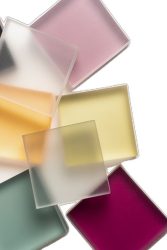
Glossy surface vs. matte surface
• A glossy surface with high smoothness reflects light directly and creates a deep and attractive effect.
• A matte surface has a microscopic texture that diffuses light and makes scratches less visible.
• The choice between these two surfaces depends on the end use and conditions of use.
The Importance of Polymer Grade
Even within a given polymer, choosing the right grade is of great importance. For example, in PVC, increasing the K-Value usually leads to a decrease in surface gloss.
4. Effect of Polymer Additives on Gloss
Additives play a decisive role in the final appearance of parts and can increase or decrease gloss.
Opaque additives
• Fillers such as calcium carbonate, talc and silica
• Metal oxides such as aluminum oxide and magnesium oxide
• High molecular weight waxes
• Silica-based opacifiers
Also, some resins with light-absorbing groups such as nitrocellulose, amino resins and alkyds have an inherent tendency to become opaque.
Other gloss-reducing agents
• Titanium dioxide
• Stabilizers
• Impact modifiers
• Blending of multiple polymers or grades
In general, clear grades of additives provide higher gloss but increase the final cost of the product.
5. Glossing and surface improving additives
To increase the gloss of the surface, certain additives are used:
• External lubricants
• Low molecular weight waxes
• Polyethylene wax (especially in PVC)
• Surface leveling agents and homogenizers
• Rheology modifiers
These additives improve the surface quality by reducing surface tension, improving flowability, reducing voids and increasing scratch resistance.
6. Process parameters affecting gloss
After selecting the right materials, the production process conditions play a decisive role in the final result.
Compound Mixing and Preparation
• Uniform Distribution of Materials and Additives
• Prevention of Incomplete Dispersion
Extrusion Temperature
• Low Temperature → Incomplete Melting and Rough Surface
• Controlled Temperature → Smooth and Shiny Surface
Die and Screw Design
• Hard Chrome-Coated Die Creates a Shiny Surface
• Proper Screw Compression Ratio Ensures Uniform Melting of Polymer
7. The Role of Cooling in the Gloss of Extruded Parts
The cooling system is one of the hidden but very effective factors in producing shiny parts.
• Using cold water (about 10 to 30 degrees Celsius) causes the crystal structure to become fine-grained and increases gloss.
• Hot water may cause the surface of some polymers to become dull.
• The distance between exiting the die and entering the water must be optimal; an improper distance causes distortion or dullness of the surface.
8. Surface Finishing Methods; From Steam Polishing to Roller Polishing
Steam Polishing
Steam polishing is one of the advanced methods for achieving a smooth and transparent surface and is widely used in the production of optical components.
Usable polymers:
• ABS (with acetone vapor)
• Polycarbonate (with solvents such as methylene chloride)
• PMMA and nylon
This method eliminates layer lines and surface roughness and creates a glassy effect.
Roller Polishing and Calendering
In the calendering process, the use of polishing or embossing rollers can reduce surface roughness and increase gloss. Of course, if the nature of the formulation is matte, polishing will have a limited effect.
9. Common Defects Affecting Surface Gloss
Some process defects can severely affect the appearance of the part:
• Orange peel or shark skin: caused by surface roughness, poor flowability or improper process settings
• Cloudiness: due to material incompatibility, poor dispersion or the presence of impurities
• Injection fill lines: creating wavy or streaky patterns
• Gloss around the injection gate: due to high shear stress and localized heating
• Dull bumps and bands: caused by premature solidification and stretching of polymer chains
Conclusion
Achieving a glossy, uniform and high-quality surface is the result of a combination of factors. Factors affecting the production of glossy parts include the correct selection of raw materials, control of additives, precise adjustment of process parameters, proper cooling and, if necessary, the use of surface finishing methods.
Manufacturers who look at these factors in an integrated manner not only achieve higher gloss, but also significantly increase the quality, durability, and added value of their products.
Contact Afshin Karami’s Trading Company (Avan Zar Tejarat Pishro)
For practical information on the plastics industry, visit the articles section of irplastics.com.
Contact our experts to purchase and place an order or inquire about the price of plastic raw materials.