

Introduction
UV stabilizers are among the most important polymer additives that play a vital role in increasing the durability and shelf life of plastic products against sunlight and ultraviolet (UV) radiation. Without the use of these compounds, polymers become yellow, brittle, and lose mechanical properties due to long-term radiation. Today, with the development of new technologies in the petrochemical industry, various types of light stabilizers such as HALS, UV absorbers, and nickel compounds are produced, each of which prevents light degradation in a specific way. In this article, we will introduce this group of materials, how they work, and the importance of using them in different grades of polyethylene and agricultural films.
Polymers are widely used in various industries, from packaging and automobiles to agriculture and household appliances, due to their unique properties. However, one of the major challenges in their use is degradation due to ultraviolet (UV) radiation. This radiation causes yellowing, brittleness, and a decrease in the mechanical properties of polymers. To prevent these damages, UV stabilizers are used, which act as a protective shield and increase the useful life of plastic products. In this article, we will get acquainted with the three main groups of UV stabilizers, including HALS, UV absorbers, and nickel compounds (Ni-Quencher), and we will examine their performance in various applications, especially in agricultural and polyethylene films.
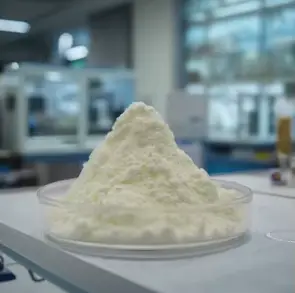
Types of UV Stabilizers
In general, UV stabilizers are divided into three main groups, each with its own function and characteristics:
Hindered Amine Light Stabilizers (HALS)
They are the most advanced generation of light stabilizers that react with destructive free radicals and stop the polymer degradation chain. Their function is like an intelligent protection system that prevents the spread of destructive reactions due to light radiation.
Common types of HALS include:
a) Low molecular weight HALS (such as HALS1)
b) High molecular weight HALS (HALS2 and HALS3) which perform better in terms of polymer compatibility, thermal resistance, volatility and stability.
c) NOR HALS is a new type of these compounds that offers higher chemical resistance to sulfur, halogen and acidic compounds.
In addition to preventing the formation of free radicals, this group is also highly stable against external factors such as pesticides and pigments and works well in thick and thin parts.
UV Absorbers
This group includes compounds such as benzophenone and benzotriazole that absorb ultraviolet energy and convert it into heat. Light absorbers are very suitable for colorless and thick products and are usually used together with other stabilizers.
Their use must be done carefully and in the appropriate concentration, because in products thinner than 100 microns they tend to migrate and leave the surface.
The important point is that light absorbers have little effect in the presence of pigments, because most pigments themselves act as reflectors or absorbers of waves. In colored products, it is better to use pigments with higher UV resistance rather than antioxidants or absorbers.
However, in some cases, benzophenone (at a dosage of 0.25 to 1%) is used to protect the pigments from discoloration.
Benzotriazole is usually used more in polystyrene.
Nickel compounds (Ni-Quencher)
These substances prevent polymer degradation by inactivating active radicals and converting destructive energy into harmless forms. The final appearance of the product containing Ni-Quencher usually has a green shade, which is why it is not suitable for colored products. However, it is used in metallic pigments such as silver, yellow and brown.
Application in Agricultural Films
In greenhouse and agricultural films, in addition to resistance to UV light, stability against sulfur and halogen compounds found in pesticides is also important.
Types of absorbers and their applications:
Benzophenone: absorbs light in the range of 230–390 nm (UVA1)
Benzotriazole: stronger absorber in the range of 280–390 nm (UVA2 and UVA3)
Triazine: suitable for long-term stability, especially in combination with HALS
Phenyl or aryl ester: effective at low wavelengths
Note: The use of fillers such as calcium carbonate and talc can reduce the performance of UV light stabilizers.

UV Stabilizers in Polyethylene
In polyethylene products used in outdoor environments, the addition of light stabilizers is essential. The type and amount of additive should be determined based on the type of polymer, application, and expected lifespan.
a) In HDPE:
Although HDPE films are less exposed to direct sunlight, the use of HALS is also effective in this grade. Among the stabilizers, HALS has the highest efficiency. In comparison, UVA19 light absorber has shown a weaker performance. Usually, a combination of several types of stabilizers increases the final durability of the product.
b) In LDPE and LLDPE:
Since these grades are mostly used in the production of agricultural films, they require higher light resistance. In the past, benzophenone, benzotriazole and then Ni-Quencher were used due to their cost-effectiveness, but today they have been replaced by polymer HALS with high compatibility.
Among the different types, HALS3 performs best. Increasing the concentration of this additive can increase the useful life of the film. In general, a film with a thickness of 200 microns, under the same conditions, will last about twice as long as a 50-micron film.
Application of UV Stabilizers in Various Industries
- Production of food packaging films
- Production of packaging films for goods exposed to sunlight
- Production of playground equipment in parks
- Production of various films used in the agricultural industry such as: greenhouse films, mulches, coatings on agricultural products
- Production of medical devices and equipment
- Etc.


Combination Products and Technical Notes
Some products, such as BASF’s Tinuvin 791 and Tinuvin 783 grades, are a combination of HALS and an optical absorber. These blends combine the benefits of both groups (low and high molecular weight) and are well-suited for polyolefins, particularly polypropylene.
Tinuvin 783 is ideal for thin films, while Tinuvin 791 is more commonly used for bagging and non-food applications.
Some Commercial UV Stabilizers
| Company | Country | Product Name | Ingredients |
| Basf | Switzerland | Tinuvin (791,765,NOR 371,783, XT200) | Combination of UV absorber and HALS |
| Basf | Switzerland | Chemoabsorb | Benzophenone, UV attractant |
| SABO | Italy | SABOSTAB UV (65,66,91,91 50PP,119) | Benzophenone, UV attractant |
| SABO | Italy | Ultrabsorb (094,270,322) | UV attractant |
| CYTEC Industries INC | USA | CYASORB UV-531 | Food Grade |
| Go Yen Chemical Industrial Co. | Taiwan | GoyenchemUV-292 | Food Grade |
Safety Warning:
Since UV Stabilizer materials have relatively low melting and flash points, cold or low speed mixing should be used during preparation to reduce the risk of fire. However, under normal extrusion conditions, these materials are safe and non-flammable.
Iranian Grades with Stabilizers
| Grade | Stabilizer |
|
Process Stabilizer |
|
Process Stabilizer |
|
Process Stabilizer |
|
Process Stabilizer |
|
Process Stabilizer |
|
Process Stabilizer |
| UV Stabilizer | |
| UV Stabilizer |
Conclusion
UV stabilizers play a key role in extending the life and maintaining the quality of polymer products. Choosing the right type based on the type of polymer, product thickness and environmental conditions can make a significant difference in the final performance. Combining several types of stabilizers, such as HALS and UV absorbers, provides the best protection against sunlight. In the petrochemical industry and agricultural film production, the use of light stabilizers not only improves resistance to radiation and heat, but also increases the economic value and durability of the product.
The correct choice of UV stabilizer plays a very important role in maintaining the quality, color and mechanical properties of polymer products. Each group of stabilizers has its own characteristics and advantages, but in many cases, combining several types of them provides the best result.
For example, long-lasting HALS, direct UV light absorbers, and radical-scavenging nickel compounds can all work together to provide the highest level of light protection for polymers.
Finally, by selecting the right type and amount of additive based on polymer type, product thickness, and environmental conditions, the durability and stability of polymer products can be significantly increased.
Get in Touch wit KPPlastics-Afshin Karami Trading Company
Contact our sales experts for advice on purchasing plastic raw materials in various grades for export and supplying raw materials for domestic production.