
Introduction
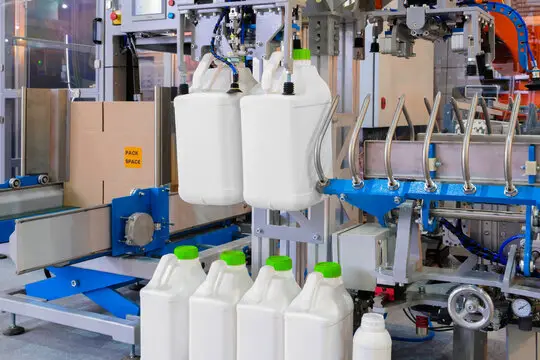
Manufacturing methods convert raw materials into completed goods. One example of such a method is Blow Molding. Typically, blow molding is employed to produce hollow plastic items. Common products we encounter daily, such as bottles and containers, are manufactured through the blow molding technique. Understanding these processes allows you to make more informed choices, communicate effectively with production teams, and identify opportunities for enhancement in the supply chain.
Here at KPPlastics-Afshim Karami Trading Company, we offer an in-depth explanation of Blow Molding. In this article, let’s explore:
- Definition of Blow Molding
- Process of Blow Molding
- Polymers Grades Used in Blow Molding
- Pros of Blow Molding
- Cons of Blow Molding
- Applications of Blow Molding
Definition of Blow Molding
Process of Blow Molding
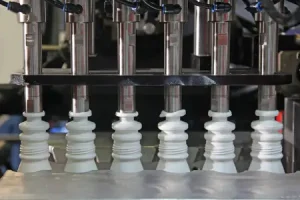
- The unprocessed plastic substance is loaded into a hopper and transported to the extruder. The extruder warms and liquefies the plastic granules. It is subsequently transformed into a thick molten plastic. The heated plastic is subsequently pushed through a die opening to create a plastic tube known as a parison.
- The prison is pushed through a cooling chamber. There, it becomes partially solidified to achieve the required wall thickness. The parison’s length is regulated to align with the dimensions of the finished product.
-
The mold is made up of two segments. The parison is moved to the mold. The mold sections come together around the parison, enclosing it inside the cavity.
-
A nozzle that blows air is placed into the parison. Compressed air is forced into the plastic tube (parison). The compressed air pushes the parison to stretch and fit the mold’s shape, creating the hollow item.
-
After the parison has grown and occupied the mold space, the air used for blowing is halted. The mold is permitted to cool down. This cooling procedure hardens the plastic, enabling the item to maintain its form.
-
Once the product has cooled enough, the mold sections separate. The completed item is released.
-
Extra plastic, like the flash or gate remnants, is cut away from the product with a trimming machine.Based on the particular product specifications, further post-processing actions (like annealing, decorating, or combining several components) might be carried out. This provides an overview of the blow molding procedure, which includes three prevalent varieties of blow molding.They are,Extrusion Blow MoldingInjection blow moldingInjection Stretch Blow Molding
Gaining knowledge on the topic offers you understanding of cost frameworks, production effectiveness, and quality management.
Polymers Grades Used in Blow Molding
- Polyethylene Terephthalate (PET)
- High Density Polyethylene (HDPE)
HBM 5020
HBM 5520
HDPE 6200B
HDPE 8200B
Pros of Blow Molding
- Blow molding is a fairly rapid production method. The molds employed are frequently more affordable than alternative production techniques. This renders it efficient and economical for large-scale manufacturing of hollow plastic components.
- Blow molding provides flexibility in design. It enables the creation of detailed designs and complex forms in the end products.
- Blow molding allows for the creation of sturdy yet lightweight plastic items. This particularly advantages bottle manufacturing, as minimizing weight can affect shipping expenses and ecological factors.
- The blow molding technique enables the production of components that have uniform wall thickness. This guarantees product quality and structural integrity.
- Blow molding is ideal for producing large products. Its capacity to generate a large number of components quickly renders it ideal for multiple purposes.
Cons of Blow Molding
- The process is primarily suited for certain types of plastic. This limits the range of materials that can be used in blow molding.
- Molds are often less expensive, but the initial tooling costs for blow molding can be relatively high. This makes it less cost-effective for small production runs or prototypes.
- Setting up and adjusting the machinery for blow molding can take a considerable amount of time. This affects production efficiency.
Applications of Blow Molding
Blow molding is used for manufacturing plastic bottles and containers for,
- Beverages
- Household products
- Personal care items

Blow molding’s ability to create large, lightweight, and durable components is used to produce various automotive components. Such as,
- Fuel tanks
- Air Ducts
- Reservoirs
The blow molding process is used for manufacturing packaging materials like,
- Plastic drums
- Jerry cans
- and other packaging solutions for the transportation and storage of liquids.
Various household items including,
- Storage containers
- Buckets
- Cleaning supplies
- are manufactured using blow molding.
Blow molding is used to make a variety of medical devices, such as
- Catheters Balloons
- sample containers

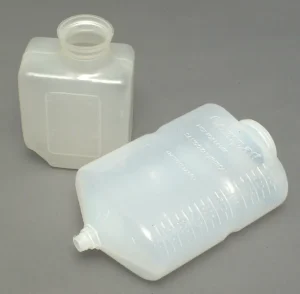
Blow molding does not stop here. It is also used to manufacture pipes and fittings, thus finding its applications in plumbing, irrigation, and drainage systems. As we mentioned before a lot of our everyday objects are being manufactured using blow molding. Thus making it a versatile manufacturing process.
Conclusion
In conclusion, blow molding stands as a versatile and widely utilized manufacturing process, particularly in the production of hollow plastic products.
Its applications span various industries, from packaging and automotive to toys and medical equipment. Understanding the specific requirements of your project is crucial for determining whether blow molding is the most suitable method.
How KPPlastics can help you ?
We KPPlastics-Afshin Karami Company, your manufacturing partner, offer you high-quality, on-grade virgin and compound plastic raw materials in differnt grades from all cutting-edge, advanced and professional Iranian petrochemical companies with international standard.
Contact us
At KPPlastics, we pride ourselves on being a best provider of plastic raw materials plastic raw materials.
With a strong commitment to precision, innovation, and customer satisfaction, we are your trusted partner for all your plastic blow molding, injection molding and extrusion molding needs.
You can completely rely on Us! We simplify your complicated manufacturing processes!